Bringing Native Voices to Poly
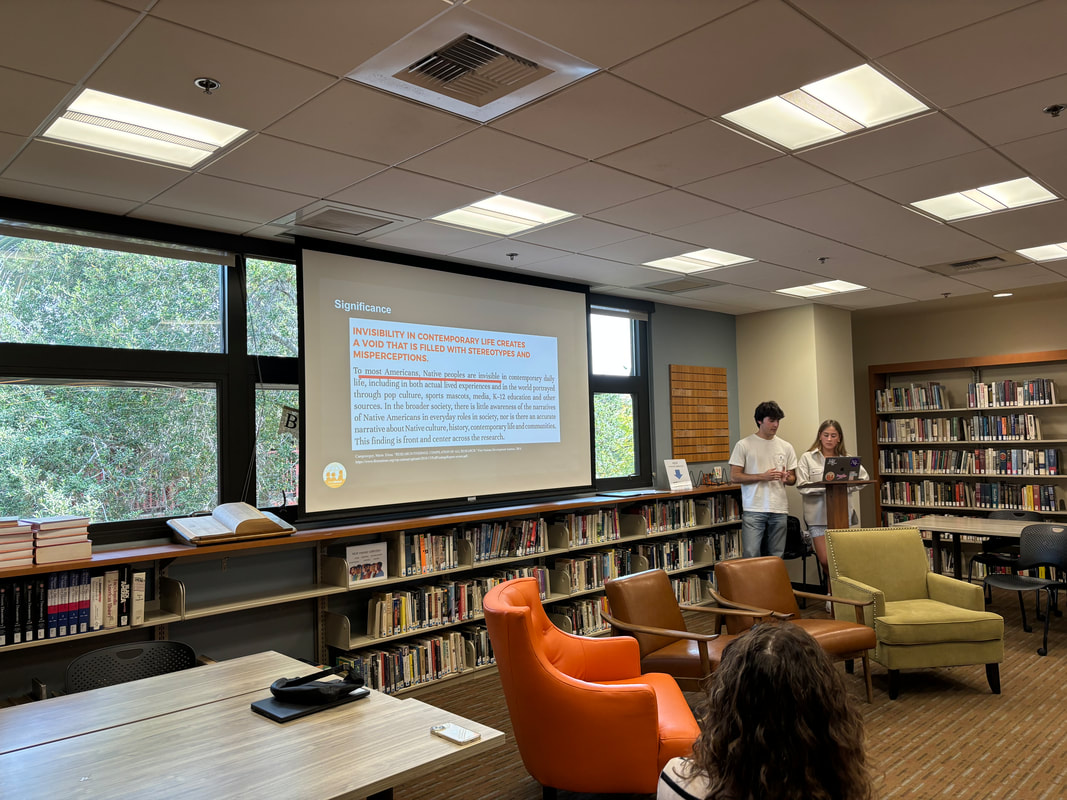
May 2024This past Wednesday, my sister and I presented our capstone project, which was focused on addressing the disparities within the educational system when it comes to Native Americans. We often found through our own experiences growing up in public and private schools that native people were portrayed as a thing of the past. Because of this apparent failure in the educational system, my sister and myself were never encouraged to find out more about our Native Heritage.
From our dad's side, we are members of the Wendat-Huron nation in Wendake, Canada. Two summers ago, we had the opportunity to visit the reservation, and made so many connections to family that we had never known about. For instance, we talked with our cousin Remy, who sits as the current chief of the tribe. We learned about current tribal conflicts and the disparities they faced, as well as visited some key places, such as the community center and their renowned museum and hotel. One of the coolest experiences during that trip though was going to the Onwha Lumina Lightshow. It beautifully portrayed my tribe's culture and history. The word "onwha" means "now" in Wendake, but it also carries the idea of a passage or a bridge between past and present. I really felt that this connection had been lacking in my own heritage, and this really motivated us to pursue this project.
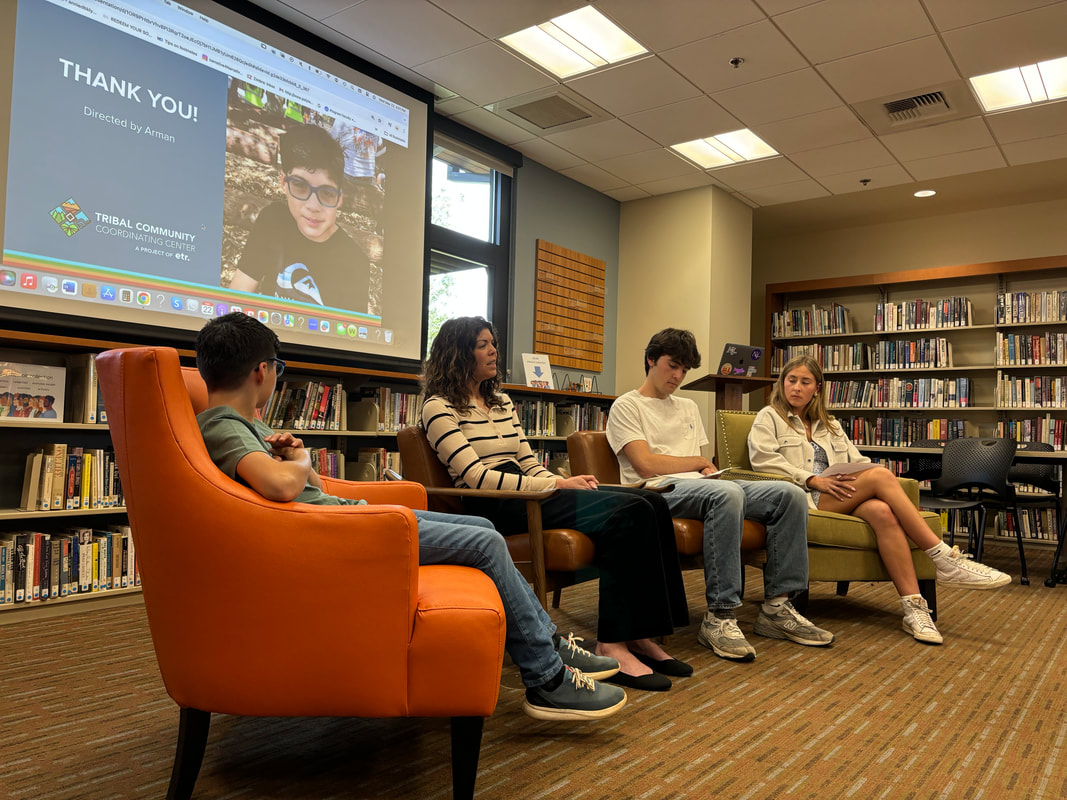
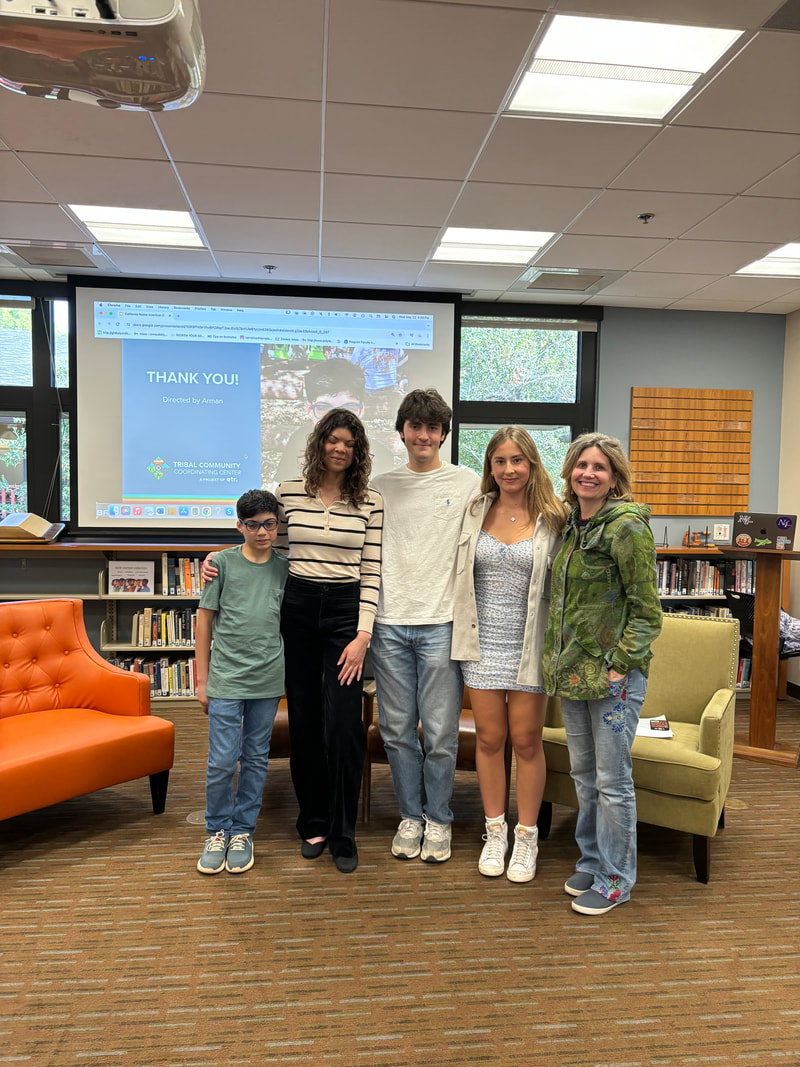
We first met with Tom Allard, who pointed us to Native Voices, an equity theatre company in LA that makes Native playwrights. We had the initial idea of getting a grant to pay for a performer or for performance by Native Voices at Poly. However, communication with both Native Voices and lower school teachers really stalled, and we were never able to see through our initial plan. So instead, we reached out to Ravena Soto, a Project Coordinator for the Tribal Community Coordinating Center at ETR. She works to support California Native tribes and organizations, especially against the harmful effects of the tobacco industry. She had a very informative kahoot and interactive presentation that brought in personal anecdotes, facts, and a bit of fun for the audience. To top it off, her 11 year old son Arman helped present some of the slides.
The event worked as follows: first, my sister and I gave context to our presentation and shared how the disconnect with our native heritage and the idea of seeing and not living it was a result of the education system portraying indigenous peoples as a thing of the past. Second, Ravena and Arman gave their informative presentation, which not only covered the history of California Native tribes, but also offered insights into how they look today.
Thanks to Ravena and Arman, our audience gained much more nuance and perspectives how Native American tribes today in California function and what we can do to combat the harmful portrayals that exist for many underrepresented groups in the education system. I hope that in the future, Poly will bolster its teaching of indigenous peoples and other underrepresented communities in classes.