Unveiling the Tragedy of Artsakh's Ethnic Cleansing
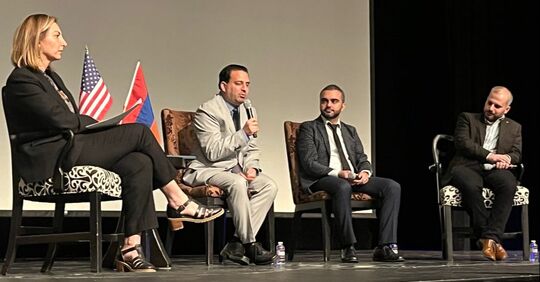
November 2023I am grateful for hearing expert perspectives on the forced displacement of over 100,000 Armenians from Artsakh. Centuries of Armenian presence in Nagorno-Karabakh ended with mass migration across the border into Armenia.
Looking at root causes through an Azerbaijan perspective, an op-ed by Ruslan Javadov describes childhood trauma from the 1990s conflict. Javadov's family lost their home in Lachin and his uncle died from a landmine. School education portrayed "Armenians were villains responsible for all our tragedies" and framed them as deceptive, establishing foundational resentment.
Contemporary Azerbaijani media coverage celebrates military victory as "liberation" without acknowledging the forcible removal of Armenians, shaping global narratives through selective reporting.
Dr. Shushan Karapetian's analysis reveals decades of explicit hostile rhetoric. Statements including the 2005 Baku mayor's declaration of elimination goals and 2022 President Aliyev's aggressive language demonstrate longstanding intentions despite international silence.
Regarding concrete action, I propose: recognizing current genocide (avoiding another 106-year delay like the 1915 Armenian genocide recognition), and applying international pressure through sanctions mechanisms via the U.S. government, ICC, and state-level advocacy.
Invoking Ubuntu philosophy—collective humanity—it's worth noting that Javadov himself hopes Armenian-Azerbaijani reconciliation can break cycles of violence.